The Individual is the longest format and rewards both endurance and shooting accuracy. Unlike other formats, athletes are penalized with time rather than a penalty loop.
In the Individual race format, standing and vision impaired classes race 12,500 meters with four shooting bouts (P–P–P–P). Each miss adds a 60-second penalty. The sitting class also competes over 12,500 meters with the same four shooting bouts, and a missed shot likewise results in a 60-second penalty.
PARA BIATHLON
Basics of Para Biathlon
Para Biathlon is a dynamic adaptation of Olympic biathlon, designed to provide fair, competitive, and exciting racing opportunities for athletes with physical and visual impairments. While preserving the essence of biathlon—combining endurance cross-country skiing with the precision of rifle shooting—the para sport introduces specific rules, equipment, and classifications to ensure a level playing field.
Visit IBU Para Biathlon section to find full details about competition formats and rules.
Athlete Classification & Factoring
To ensure fair competition, para biathlon uses a classification and factoring system based on the type and degree of impairment.
Classification Categories
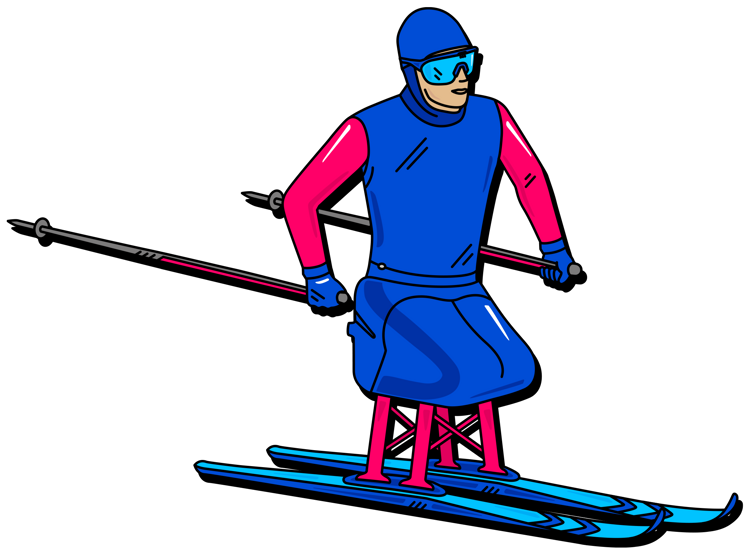
Sitting (Sit-Ski)
E.g., athletes with lower-limb impairments who compete in a seated position using a sit ski.
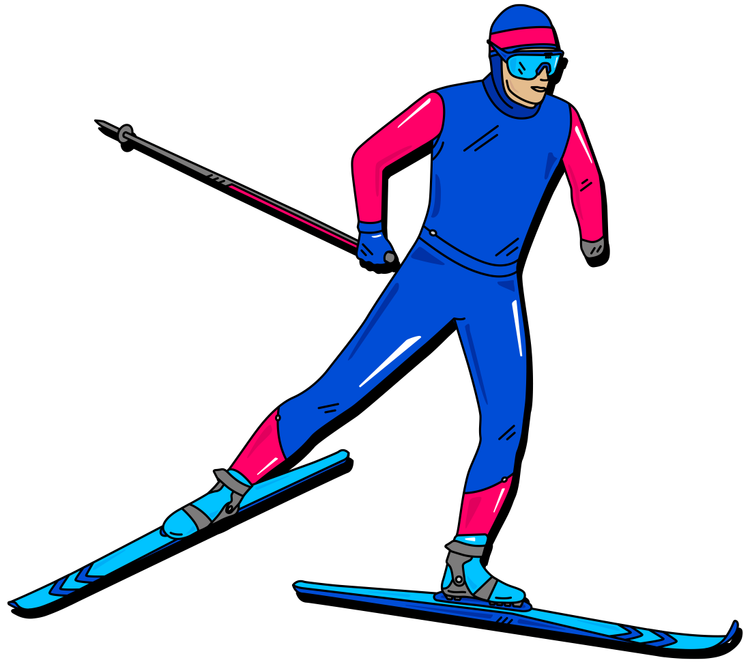
Standing
E.g., athletes with arm or leg impairments who ski standing.
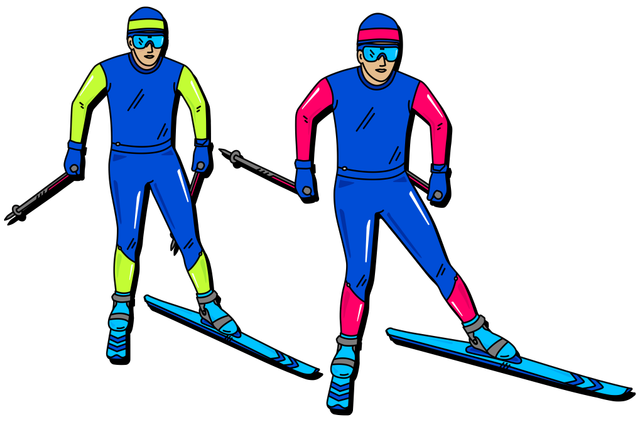
Vision Impaired
E.g., athletes with partial or total vision loss.
Each category contains subclasses that reflect the severity of impairment. Visit FIS Para Nordic Classification Rules and Regulations (PDF) for more information on Para Biathlon classifications.
Factoring System
To level the playing field:
- Finish times are adjusted using a percentage-based system (factoring), where more severe impairments have greater time reductions.
- This allows athletes across different categories to compete in the same race while maintaining fairness.
The IBU and IPC (International Paralympic Committee) regularly review classification and factoring to ensure balance across the sport.
Competition Formats
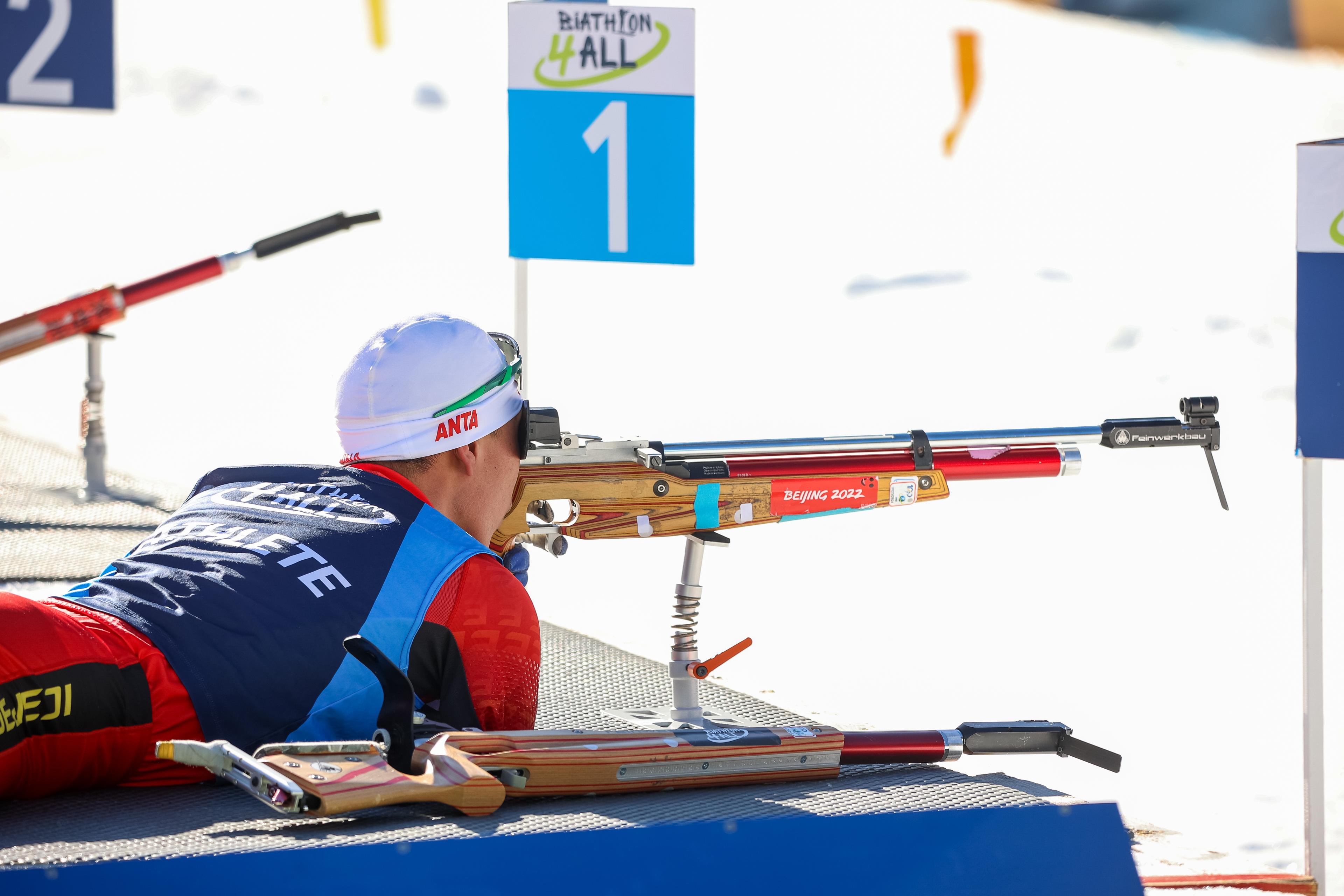
Para Biathlon races adapt formats from Olympic Biathlon, combining endurance skiing with precision shooting. All athletes shoot from the prone position, but the distances, course loops, and start formats are varied based on the specific event and categories.
The current competition formats are:
- Paralympic formats: Individual, sprint, sprint pursuit
- Other formats: Middle distance, team sprint, pursuit
Sprint
A fast-paced event that balances skiing speed with quick shooting. Athletes start individually at intervals, and the results determine the starting order for the pursuit (if scheduled).
In the Sprint race format, standing and vision impaired classes race 7,500 meters with two shooting bouts (P–P). Each missed shot adds a 150-meter penalty loop. The sitting class also competes over 7,500 meters with two shooting bouts, but a missed shot results in a 100-meter penalty loop.
Sprint Pursuit
Sprint pursuit consists of a qualification and a final, both over the same distance per category. In the standing and vision impaired categories, the distance is 3.6–4.2 km, with two prone shootings. In qualification, each missed shot results in a 15-second time penalty. In the final, each missed shot results in a 75 m penalty loop. In the sitting category, the distance is 2.4–3.0 km, also with two prone shootings and the same penalties (15 seconds in qualification, 75 m loop in the final).
Middle Distance
In the middle distance race, athletes ski 10 km in all categories. There are four shooting stages, all in the prone position. In the standing and vision impaired categories, each missed shot results in a 150 m penalty loop. In the sitting category, the penalty loop is 100 m per missed shot.
Team Sprint
Team sprint also consists of a qualification and a final. Two athletes per team alternate skiing and shooting, completing four prone shooting stages per team. In the standing and vision impaired categories, the total distance is 2.4–2.8 km. In the sitting category, the distance is 1.6–2.0 km. In all categories, each missed shot results in a 75 m penalty loop.
Pursuit
This consists of a qualification race, run in a similar format to the sprint, and then athletes start the final based on time gaps from qualification, turning it into a head-to-head chase. The first athlete across the finish line wins.
In the Pursuit race format, standing and vision impaired classes race 10,000 meters with four shooting bouts (P–P–P–P). Each missed shot adds a 150-meter penalty loop. The sitting class also competes over 10,000 meters with four shooting bouts, but a missed shot results in a 100-meter penalty loop.
Beyond the Basics: How Para Biathlon Differs
Para biathlon is more than an adaptation - it's a celebration of resilience, innovation, and elite athleticism. Every detail, from equipment to course layout, is carefully tailored to allow para-athletes to compete at the highest level while staying true to the essence of biathlon: strength, strategy, and sharp shooting under pressure.
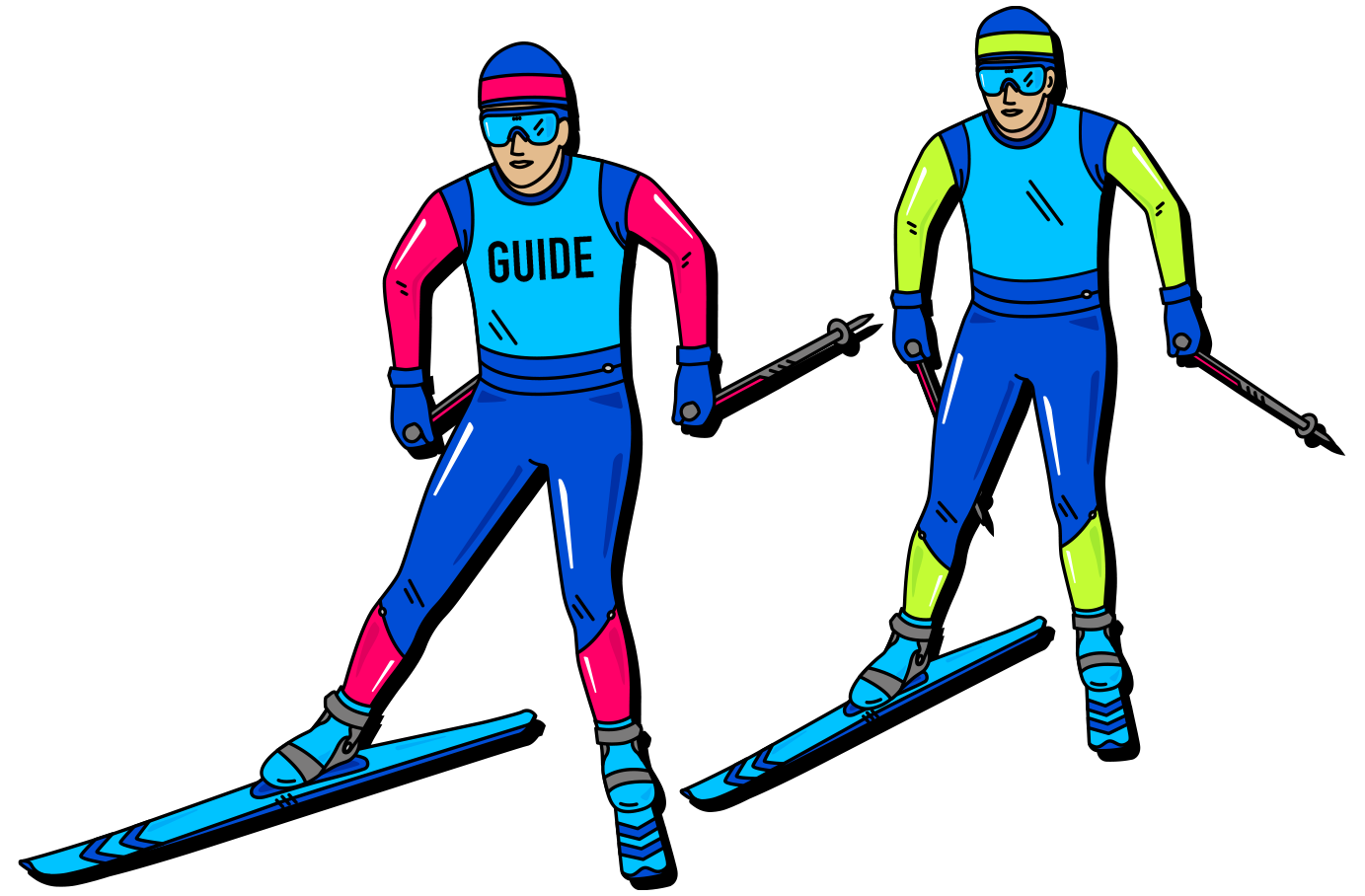
For VI athletes, guides are essential teammates.
- Guides ski in front of or alongside the athlete and provide verbal instructions about the course—turns, climbs, descents, or tactical information.
- Communication is constant, and the relationship between athlete and guide can be a major factor in performance.
- Both athlete and guide receive medals and are considered co-competitors.
Headsets and Electronic Rifles
Audio Rifles
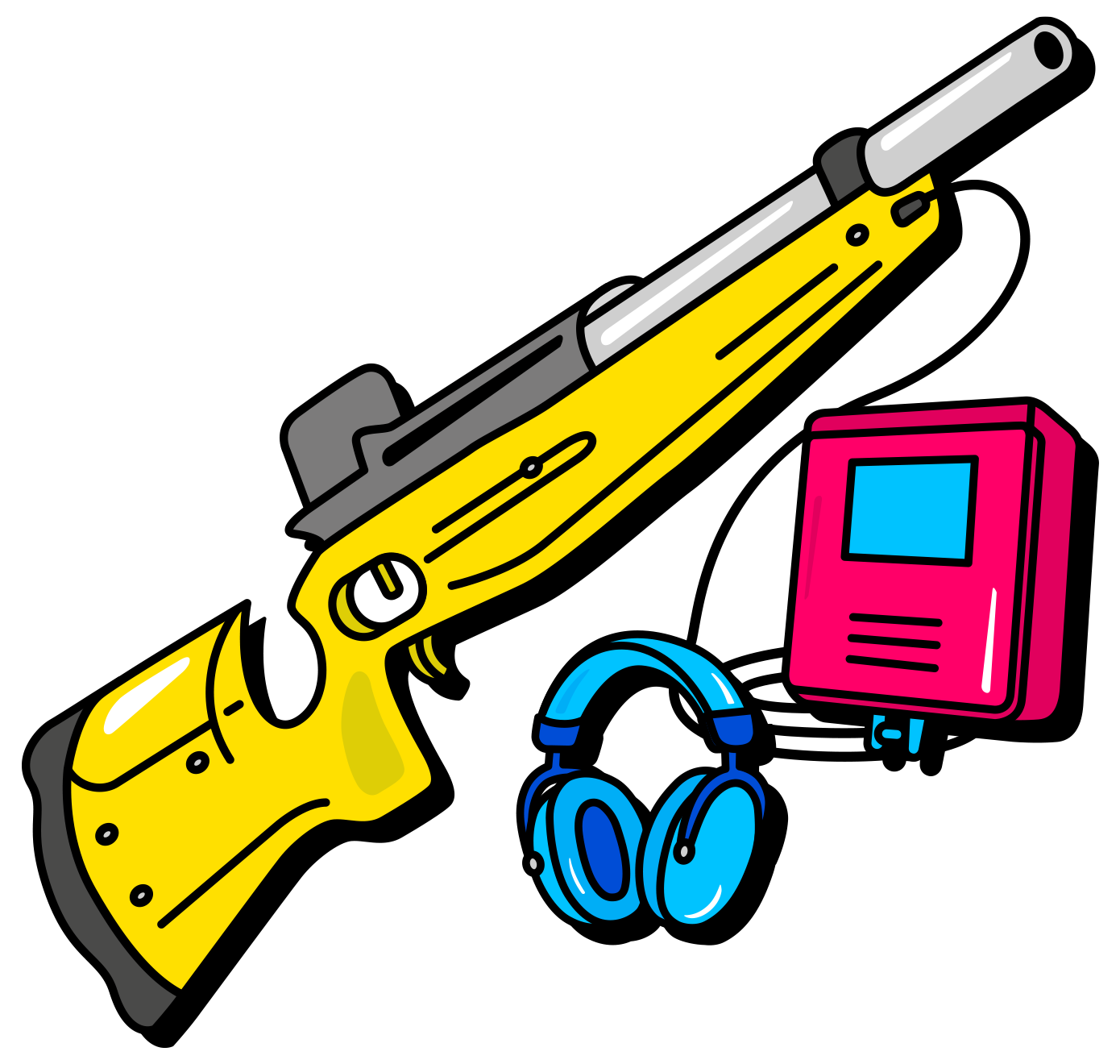
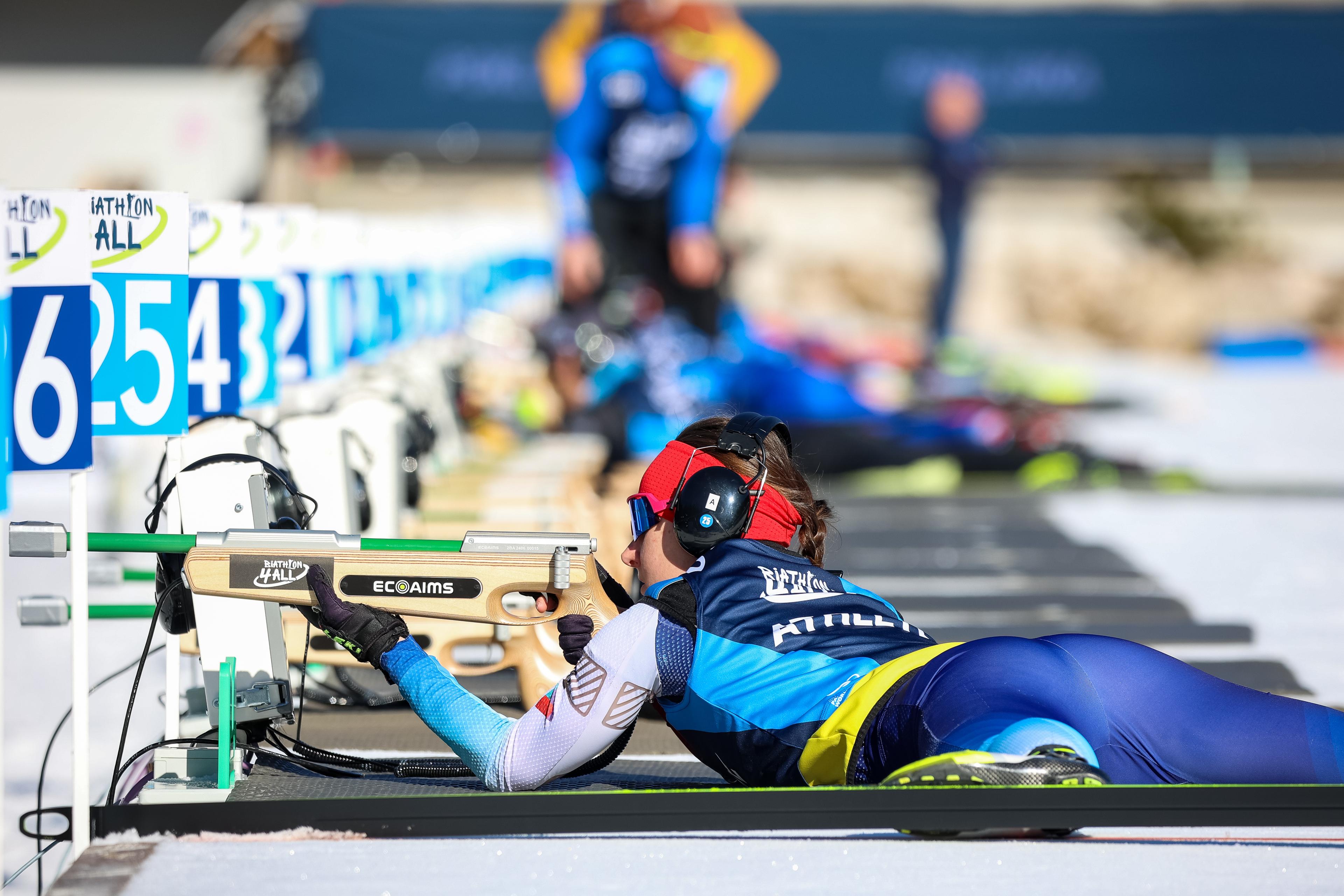
Visually Impaired Athletes (VI) use non-customisable audio rifles provided by the event organisers.
- The rifles emit auditory tones that increase in pitch as the athlete aims closer to the centre of the target.
- Athletes cannot detect vertical or lateral drift—only proximity to the centre.
- Shots are fired from right to left, and many athletes use adapted cuffs or slings to maintain positioning during shooting.
- Using a headset, athletes with vision impairment listen to acoustic signals that guide their aim at the electronic target.
Range Guidance
VI athletes have assigned shooting lanes and do not use an open-lane system.
- Guides ensure safe navigation to the shooting point and help with orientation.
- Guides remain off the firing line and follow specific range protocol to ensure fairness and safety.
- Their role is to help athletes line up, avoid lane markers, and prepare for shooting without providing any aiming assistance.
Sit-Skis: Equipment for Sit-Skiers
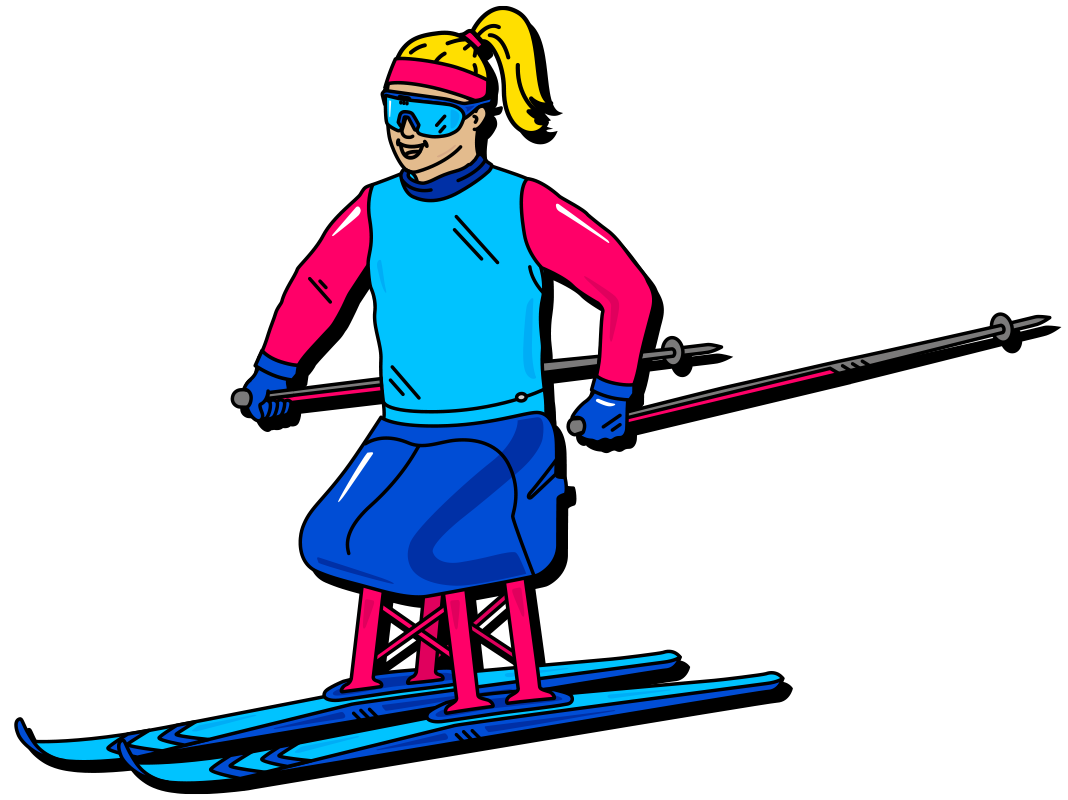
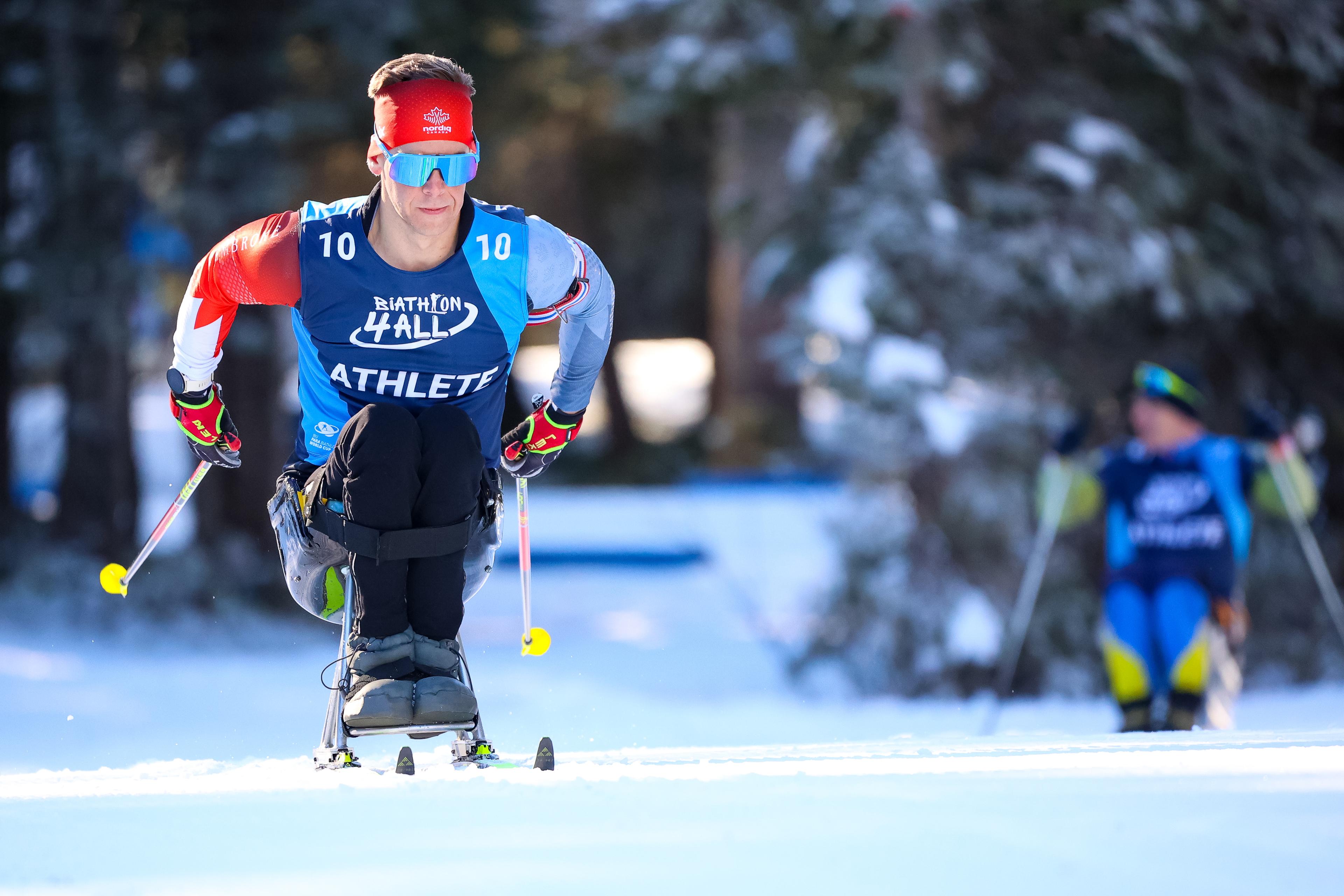
Sit skis are custom-made pieces of adaptive equipment that enable athletes with lower-limb impairments to compete in cross-country skiing and biathlon. Designed for both speed and control, they allow sit-skiers to navigate biathlon courses with power and precision.
A sit ski consists of two main components:
1. The Seat (Bucket):
- The athlete sits in a moulded seat, often made of lightweight carbon fiber or plastic.
- Each seat is individually fitted to provide stability, posture support, and comfort.
- Athletes may sit upright, or at an angle, depending on their core strength and mobility.
- The seat is mounted onto a metal frame, which is attached to two cross-country skis.
- These skis are the same as standard classic or skate skis but usually shorter in length and use a different binding system.
Sit-skiers use upper body strength and double-poling technique to propel themselves, relying entirely on their arms, shoulders, and core.
All sit skis must meet specific rules for inclusion in competition.
Course Profiles & Layouts
Para biathlon courses are thoughtfully designed to meet the needs of athletes across all classifications while maintaining fairness and challenge.
- Sit-ski courses are adjusted to avoid sharp climbs and technical descents that may be unsafe for athletes using a sit ski.
- Terrain profiles and loop lengths can be adapted to account for the demands of different impairment categories, ensuring equitable racing conditions.
- Snow grooming and track width may be modified to support sit-ski use or allow for two athletes (VI athlete and guide) skiing in tandem.
Importantly, many para-athletes are able to train and compete on standard able-bodied biathlon tracks, with little to no modification. This enables strong integration with national and local biathlon communities and fosters inclusive development opportunities. In many cases, only minimal interventions—such as slight changes to loop selection or grooming—are needed to make courses suitable for all athletes.
This flexibility supports greater collaboration between para and able-bodied biathlon programs, while ensuring the safety and fairness of competition for everyone on the course.
Shooting Format & Positions
In Para biathlon, all athletes compete only in the prone shooting position; there is no standing shooting discipline.
Sit-ski athletes can shoot in various positions depending on their impairment and sit-ski build. This can include:
- Lying on the stomach or side
- Shooting from a semi-upright position while seated in the sit-ski
Rifle Hand-Off Procedures
Para athletes do not ski with their rifles. For all standing and sitting athletes (not VI), coaches or team staff hand the rifle to the athlete upon arrival onto the mat.
After completing their shots, athletes leave the rifle on the mat before returning to the course.
Penalty Loops
Missed shots result in time penalties, but loop distances vary:
- Sit-skiers complete a shorter 100-metre penalty loop, reflecting the increased physical demand of double-poling.
- Standing and visually impaired (VI) athletes complete the standard 150-metre loop, as in Olympic biathlon.